Herringbone Wood Floors: Why This Timeless Pattern Is Worth the Investment
Posted by Aaron Schaalma
A guide to the look, design flexibility, wood species, sizing, and cost of herringbone hardwood flooring from Signature Custom Flooring.
The Short Answer
Herringbone wood flooring is a wood floor installed in a repeating V-shaped or zigzag pattern rather than in straight parallel rows. It costs more than a standard straight-laid floor because of the extra layout, cutting, and finishing labor, but it delivers a distinctive, high-craftsmanship look, works with almost any design style, and distributes seasonal wood movement across the pattern instead of along a single direction.
At a glance:
- Best for: homeowners who want a custom, high-end look in an entry, living room, or full-home hardwood floor
- Common wood species: red oak, white oak, hickory
- Common sizes: 2¼-inch single or double herringbone, 5-inch herringbone, and custom width-to-length ratios
- Cost: higher than straight-laid flooring due to layout, cutting, and cross-grain sanding labor
- Works over: engineered or solid wood systems on wood subfloors, and select systems over concrete
Overview: What Makes Herringbone Different
Herringbone wood flooring is one of those classic flooring styles that never seems to go out of fashion. There is a reason it continues to show up in beautiful historic homes, modern remodels, and custom new construction: the pattern adds character and visual interest while still feeling timeless. Herringbone can be installed in a wide range of wood species, widths, lengths, and finishes, allowing the floor to be tailored to the room rather than simply laid out in a standard straight pattern.
There are also practical reasons to consider it. Because herringbone uses shorter pieces installed in alternating directions, seasonal movement is distributed across the pattern rather than occurring primarily along one direction. The result can be a floor that visually stays tighter together and has a very stable, substantial appearance. It does require more labor and therefore costs more than a conventional straight-laid floor, but the finished look is something you simply cannot get from a standard strip floor.
1. Herringbone Has a Timeless Look
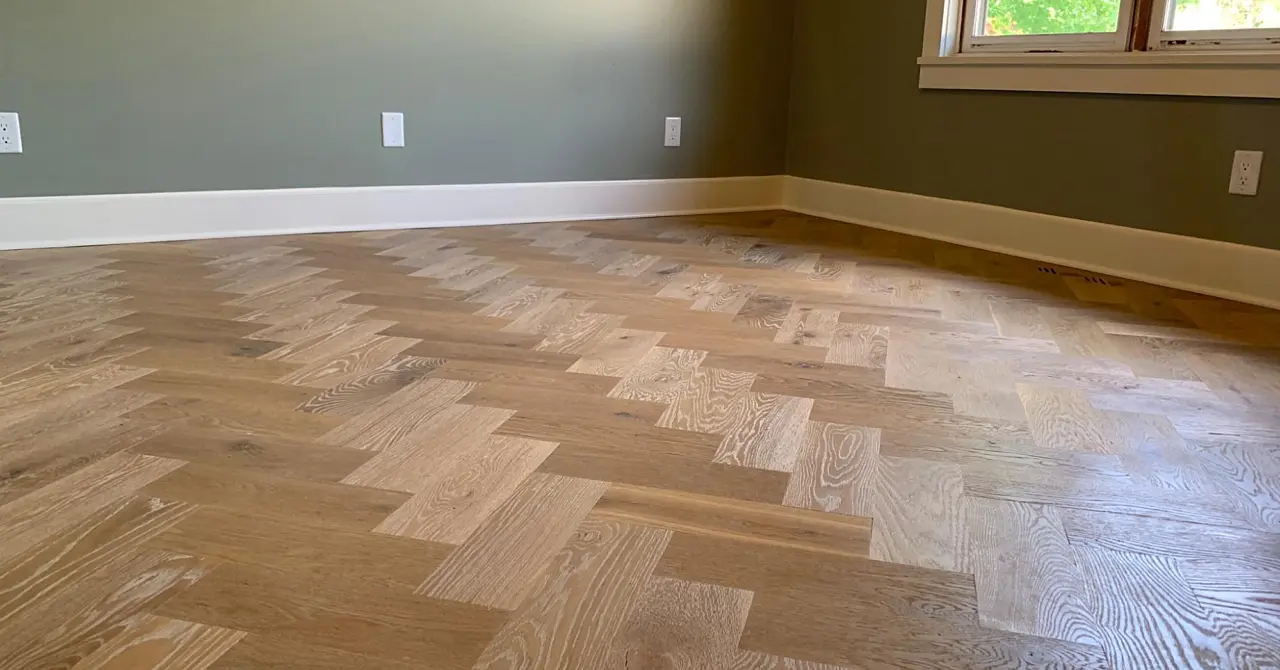
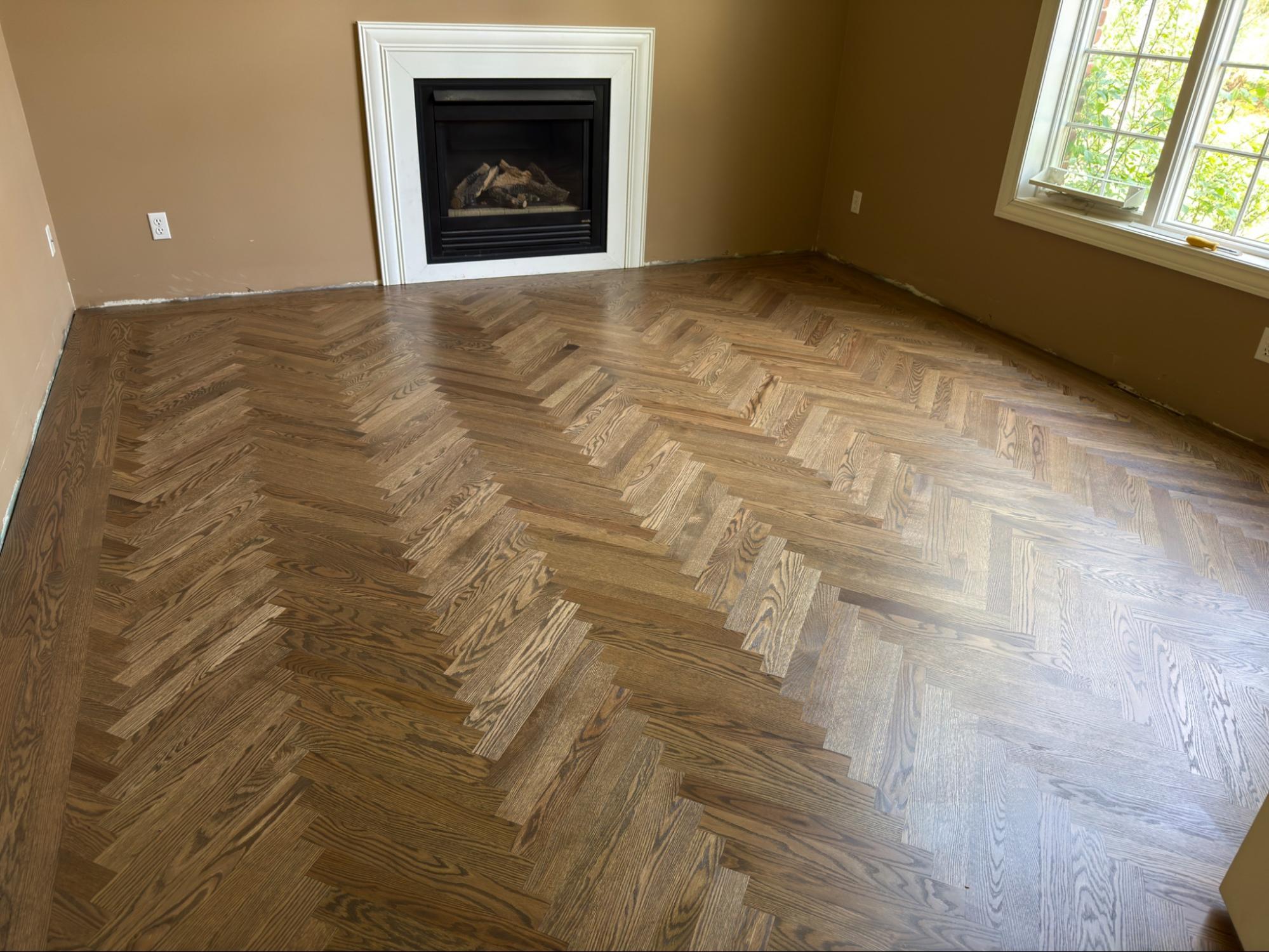
The biggest reason people choose herringbone is simple: it looks incredible. The repeating V-shaped pattern immediately gives a room more architectural detail and a sense of craftsmanship. It draws your eye across the floor and creates movement without needing a complicated color or stain treatment.
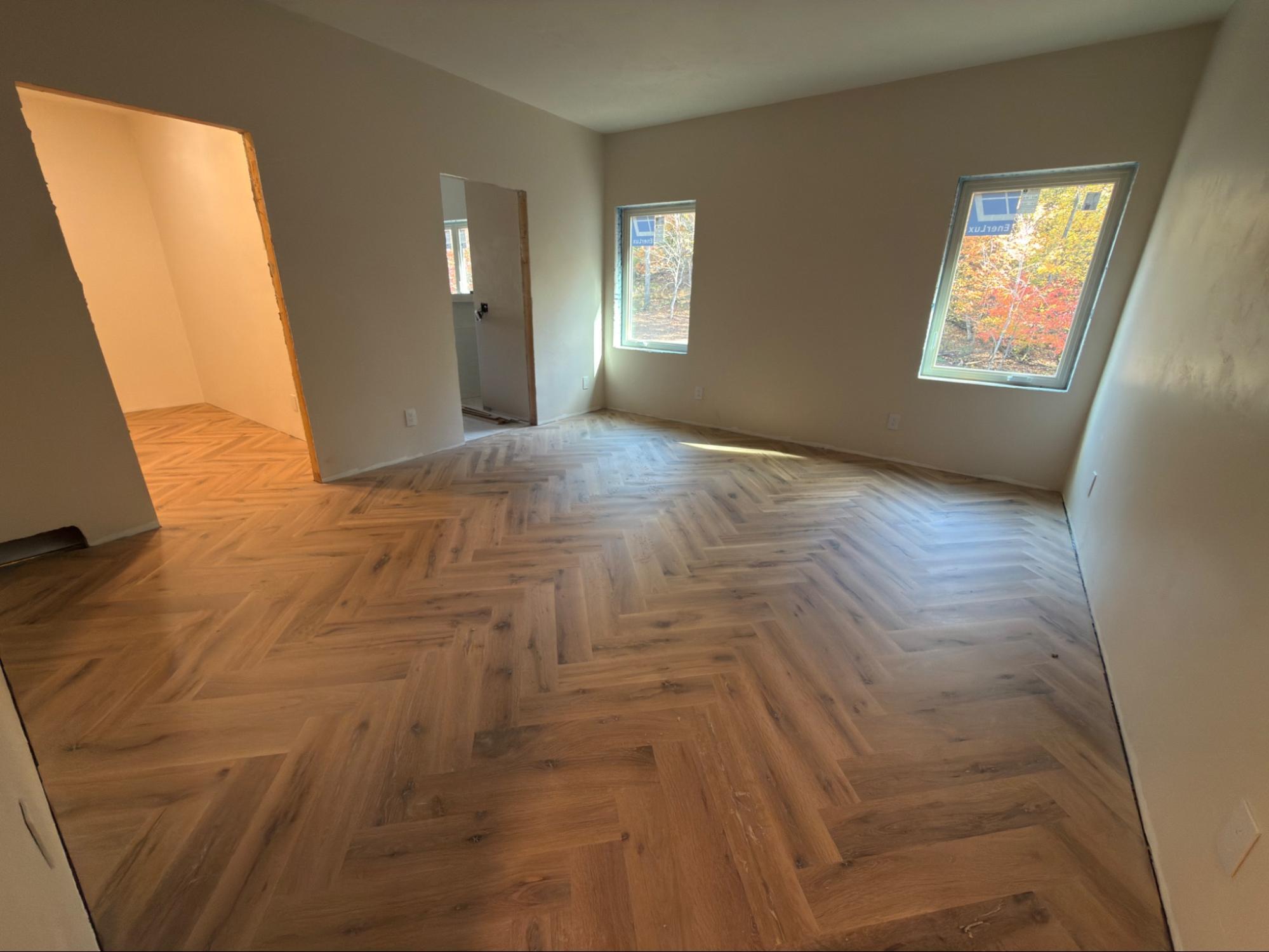
One of the things I especially like about herringbone is how the light interacts with it. Because the boards run in different directions, the light catches each row differently. One section may appear lighter while the adjacent section looks darker, even though the wood and finish are exactly the same. As the light changes throughout the day, the floor changes with it.
2. It Can Work with Almost Any Design Style
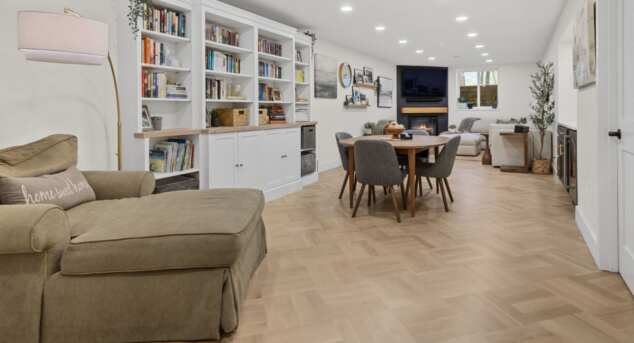
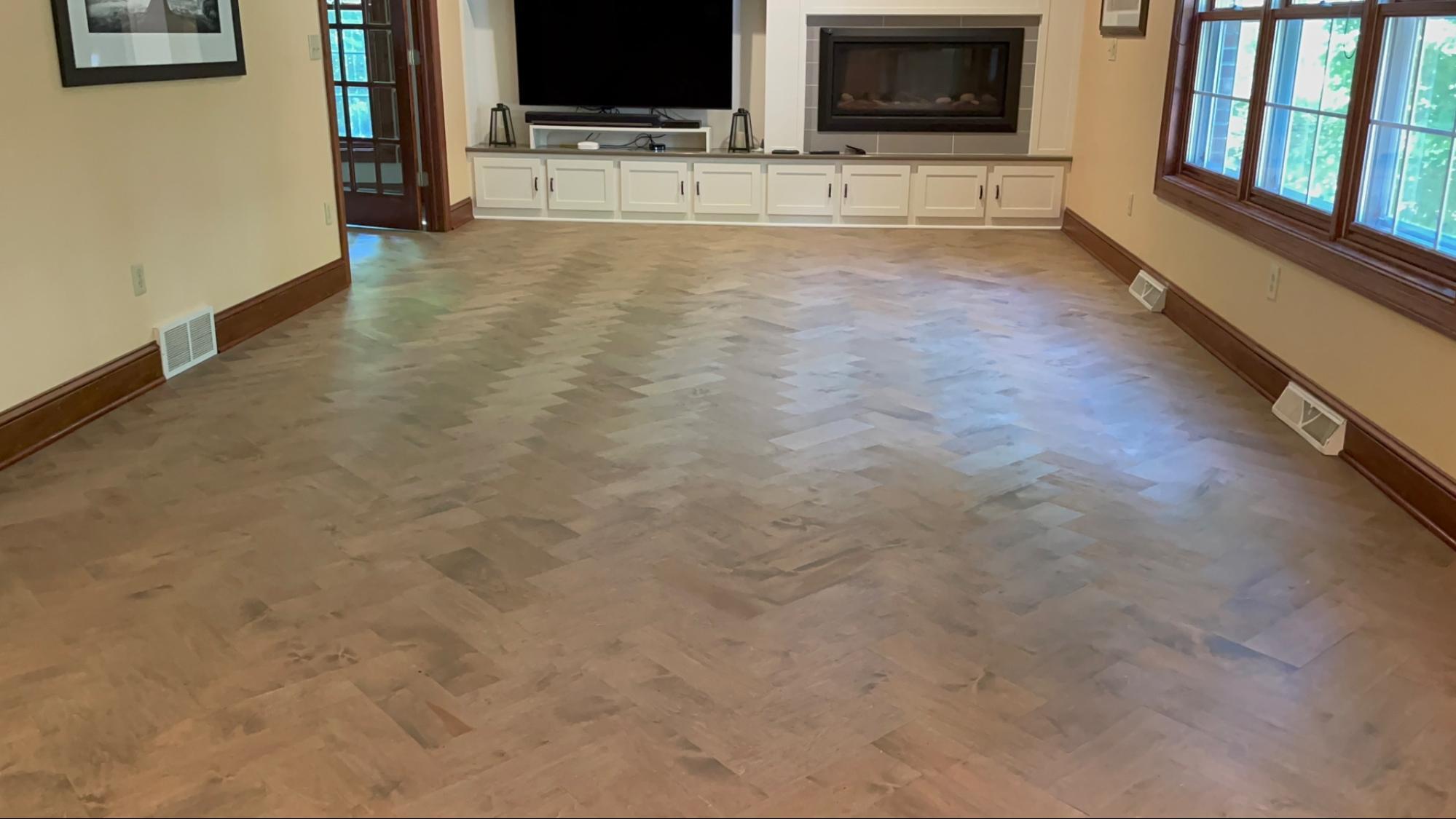
Herringbone is not limited to one particular style of home. A traditional 2¼-inch red or white oak herringbone can feel right at home in a classic interior, while a wider white oak installation with a natural or wire-brushed finish can look clean and modern. Hickory can bring even more natural variation and personality to the pattern.
The species, width, length, grade, and finish all change the personality of the finished floor. That flexibility is one of the reasons herringbone remains so popular. You can make the pattern subtle and refined, or you can make it a major design feature.
3. You Can Customize the Width and Length
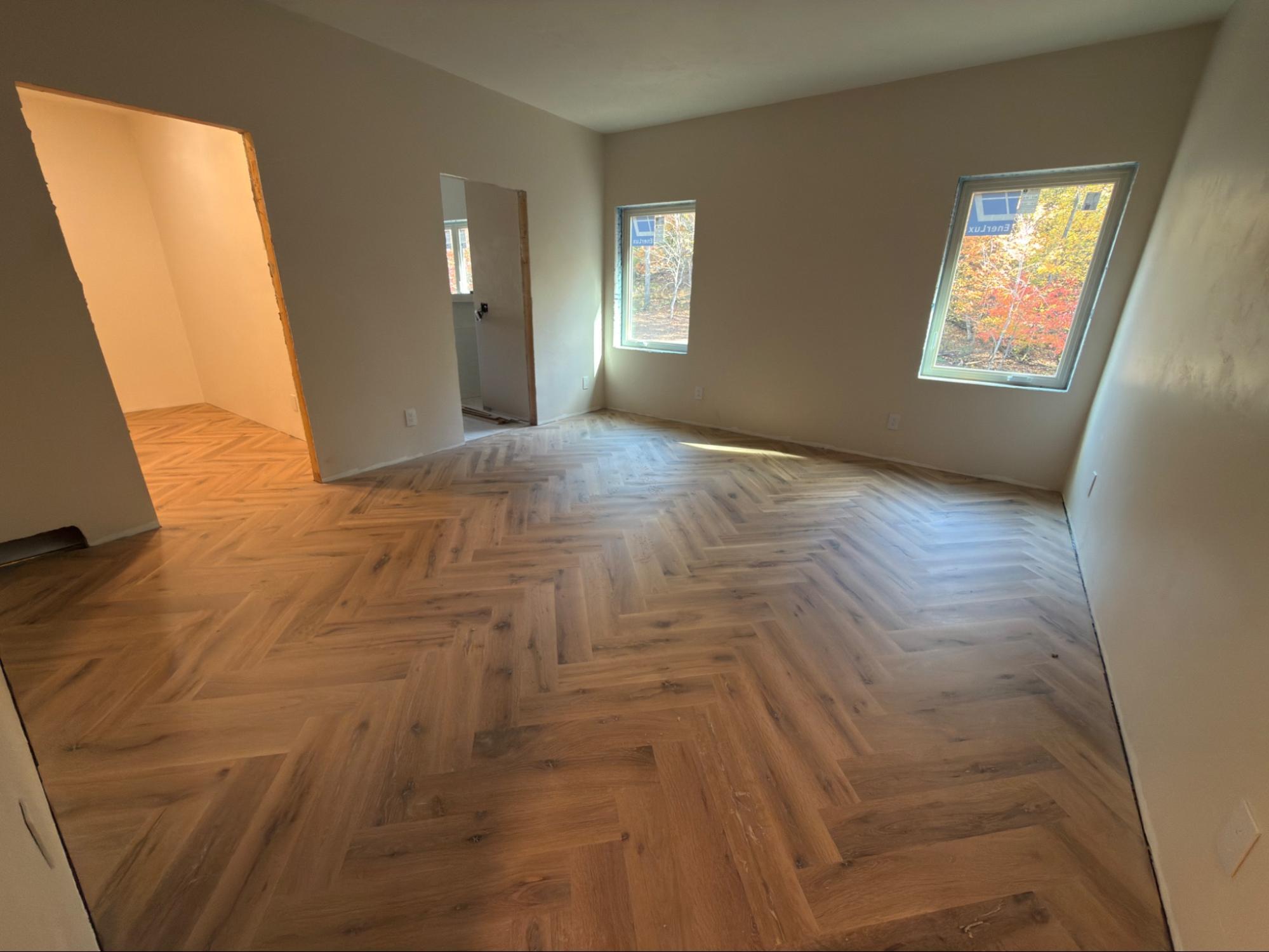
There is no single correct size for a herringbone floor. We have installed 2¼-inch single herringbone, double 2¼-inch herringbone, 5-inch herringbone, and other combinations depending on the room and the look the customer wants.
The relationship between board width and length is especially important. Herringbone pieces are commonly selected so the length works as a multiple of the width, which allows the pattern to line up cleanly as it repeats. For example, with a 5-inch-wide board, you could choose 10-, 15-, 20-, or 25-inch pieces. Changing the length changes the visual rhythm of the floor.
Shorter pieces can create a choppier, more detailed pattern, while longer pieces make the pattern feel more open and elongated. Neither is right or wrong. It depends on the size of the room and the look you are trying to achieve.
4. Double Herringbone Can Tie Different Floors Together
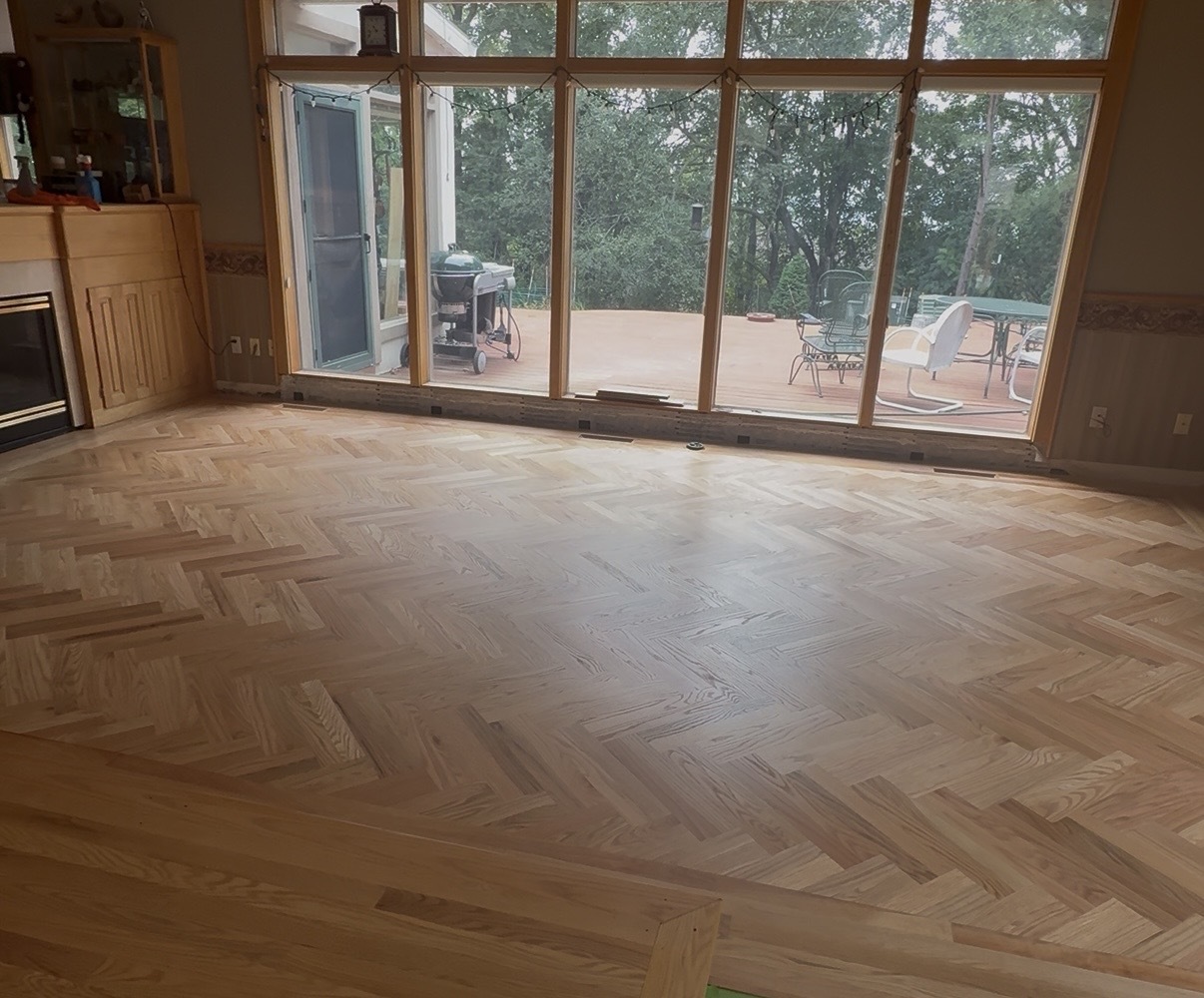
One of my favorite ways to use herringbone is to make it work with an existing floor. For example, a double 2¼-inch herringbone can complement an existing 2¼-inch strip floor while giving the new space its own identity.
That approach gives you the best of both worlds: the existing floor still feels connected to the new work, but the herringbone creates a deliberate transition rather than trying to make every area look identical. Double herringbone can bridge different areas of a home while maintaining a cohesive wood-floor design.
5. Herringbone Helps Distribute Seasonal Movement
Wood is a natural material, so all wood floors respond to changes in humidity. With a conventional long-strip floor, much of the movement occurs along the direction of the boards. Herringbone uses shorter pieces running in alternating directions, so movement is distributed across the pattern.
That does not mean a herringbone floor is immune to seasonal movement; no wood floor is. Proper acclimation, moisture testing, installation methods, expansion allowances, and reasonable indoor humidity are still important. But the shorter pieces and cross-direction layout can help the floor maintain a very tight, substantial appearance.
6. Installation Requires More Labor and That's Part of the Value
There is no getting around it: herringbone costs more than a typical straight-laid wood floor. Every piece has to be carefully positioned, and many pieces need to be cut to size. Installation is slower because the layout has to remain accurate as the pattern moves across the room.
Sanding and finishing also take more time. With herringbone, you are ultimately sanding across the grain on at least a portion of the boards because the boards run in multiple directions. That adds another layer of labor and attention to the finishing process.
Depending on the subfloor and the specific floor system, herringbone can be installed using methods such as full-spread adhesive or a combination of adhesive and mechanical fastening. It can be installed over appropriate wood subfloors and, with the right flooring system and preparation, over concrete as well.
7. The Pattern Works in Many Wood Species
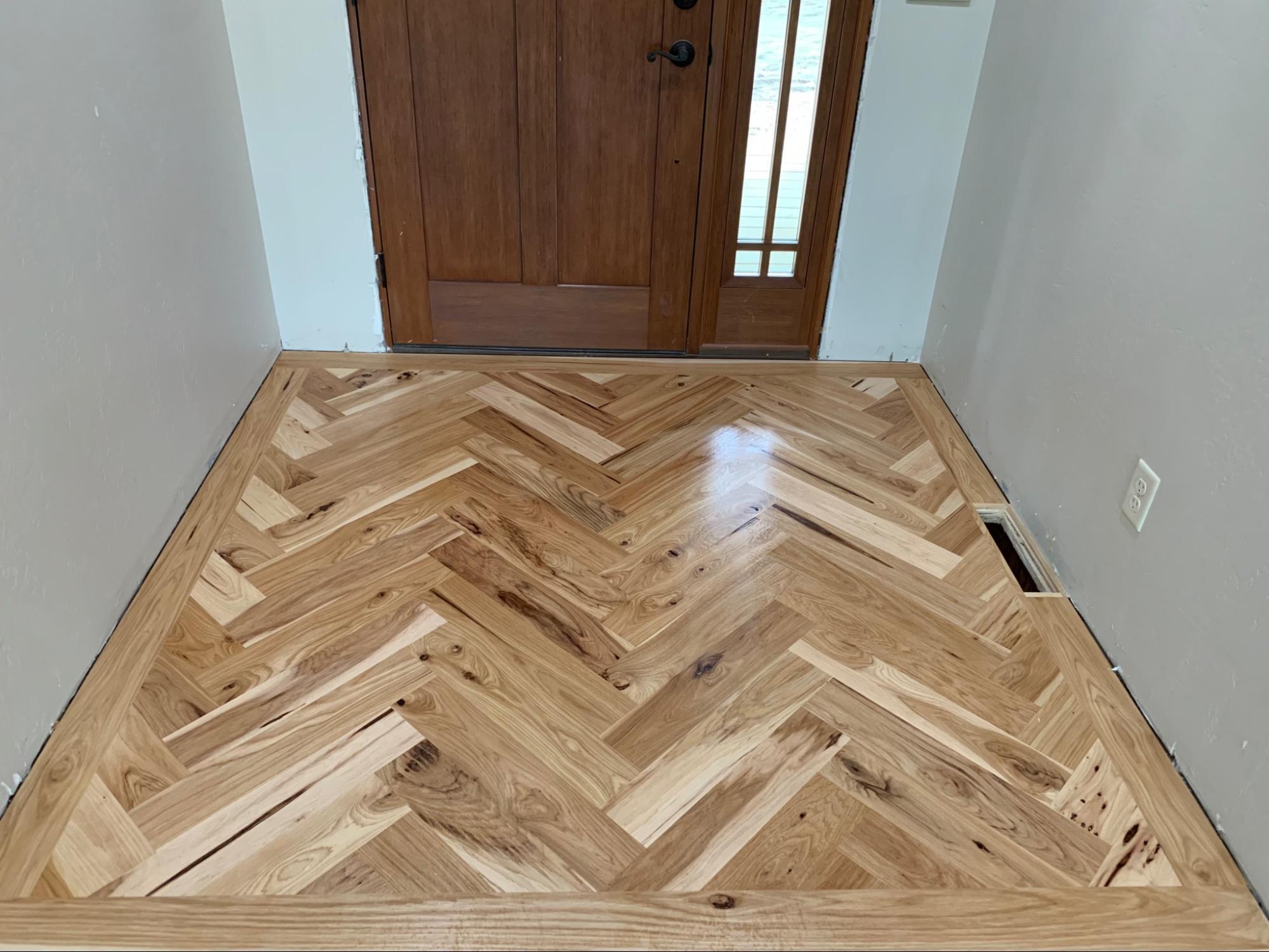
Herringbone is not limited to oak. We have installed it in red oak, white oak, and hickory, and each species gives the pattern a different personality. Oak offers familiar grain and a wide range of color options, while hickory brings more dramatic variation and natural character.
You can also change the surface treatment. A wire-brushed floor, for example, can add another layer of texture and make the grain stand out even more. The possibilities are broad enough that the floor can be designed specifically around the home.
So, Is Herringbone Worth the Extra Cost?
In our opinion, absolutely—when the design fits the space. Herringbone does cost more because it takes more time to lay out, cut, install, sand, and finish. But you are not simply paying for a different installation method. You are getting a floor with a level of visual detail and craftsmanship that a standard straight-laid floor cannot reproduce.
The beauty of herringbone is that it does not depend on a particular trend. Whether you choose a traditional 2¼-inch pattern, a double herringbone, or a wider modern installation, the pattern has a timeless quality. It adds interest to the room, interacts beautifully with natural light, works with many different wood species, and can be customized to fit the proportions of the space.
If you are considering a new hardwood floor or refinishing project and want something with a little more character than a standard straight lay, herringbone is worth considering. With the right wood species, board dimensions, layout, and finish, it can become one of the defining features of the entire room.
Frequently Asked Questions
What is herringbone wood flooring?
Herringbone wood flooring is a hardwood floor made of short, rectangular boards laid at right angles to one another in a repeating V or zigzag pattern rather than in long straight rows like a standard strip floor.
Is herringbone flooring more expensive than regular hardwood?
Yes. Herringbone typically costs more than a straight-laid floor because of the extra time needed for layout, cutting individual pieces to length, and cross-grain sanding and finishing.
What is the difference between single and double herringbone?
Single herringbone uses one board width per row, while double herringbone pairs two boards side by side in each row before changing direction, creating a bolder, wider visual pattern from the same board width.
What wood species work best for herringbone floors?
Red oak, white oak, and hickory are the most common choices. Oak offers classic grain and a wide range of stain colors, while hickory adds more natural color variation and character.
Can herringbone flooring be installed over concrete?
In many cases, yes. With the right engineered flooring system, moisture testing, and subfloor preparation, herringbone can be installed over concrete as well as over wood subfloors.
Does herringbone flooring handle humidity and seasonal changes well?
Herringbone distributes seasonal wood movement across the pattern instead of concentrating it along one direction, which helps the floor keep a tight, stable appearance. Proper acclimation, moisture testing, and indoor humidity control are still required, as with any wood floor.
How do I choose the right board width and length for herringbone?
Board length is usually chosen as a multiple of the board width so the pattern repeats cleanly. For example, a 5-inch-wide board can be paired with 10-, 15-, 20-, or 25-inch lengths. Shorter pieces create a busier, more detailed pattern; longer pieces feel more open and elongated.
Thinking About a Herringbone Floor for Your Home?
Signature Custom Flooring can help you choose the right wood species, board width and length, pattern, and finish for your space—and install it correctly from layout to final sanding. Contact us to talk through options for your project.