Choosing Hardwood Floor Colors and Designs: A Practical Guide
Posted by Aaron Schaalma
Picking a hardwood floor color and design is more than a style choice. It affects how your rooms feel, how durable your floor looks over time, and how easily you can maintain it. Here’s a clear, homeowner-friendly guide to choosing the right tone, pattern, and finish for your space.
Start with your light, not the sample
Natural light changes everything.
- Bright, south-facing rooms: Medium to dark tones add warmth and balance glare.
- Low-light spaces: Lighter woods and natural finishes keep rooms open and airy.
- Artificial lighting: LEDs with cool color temperature can make floors look gray; warm bulbs deepen amber tones. Always view samples morning, midday, and evening to gauge how they’ll look all day long..
Understand undertones
Every species and stain has a temperature:
- Warm: Red oak, cherry, walnut, and amber stains create cozy, traditional vibes.
- Cool/neutral: White oak and maple with natural or gray-leaning finishes complement modern, minimal interiors.
- Mixed materials: If you have lots of warm wood cabinets, a neutral floor (natural white oak) prevents “orange overload.”
Consider color vs. character
Two floors can share a color and look completely different based on grain and grade.
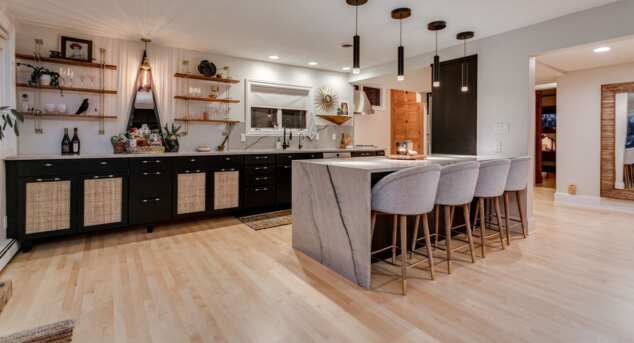
- Clean, contemporary: Select or prime grade maple/white oak with minimal knots.
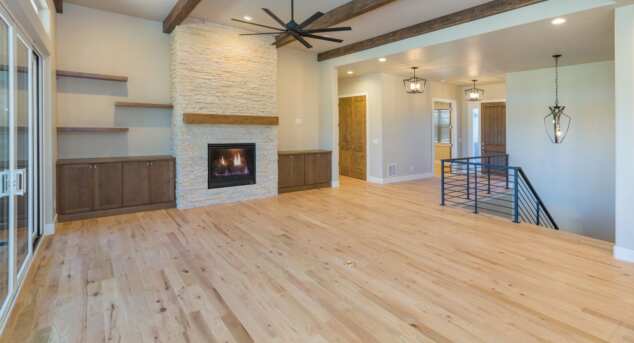
- Lived-in, rustic: Hickory or character-grade oak with visible knots and mineral streaks.
- High-traffic camouflage: Pronounced grain (red oak, hickory) hides scratches better than ultra-smooth maple.
Weigh width, length, and layout
Format is design.
- Wide planks (6–8"): Fewer seams, a modern look, great for open plans.
- Mixed widths: Adds subtle movement—nice in farmhouse or transitional styles.
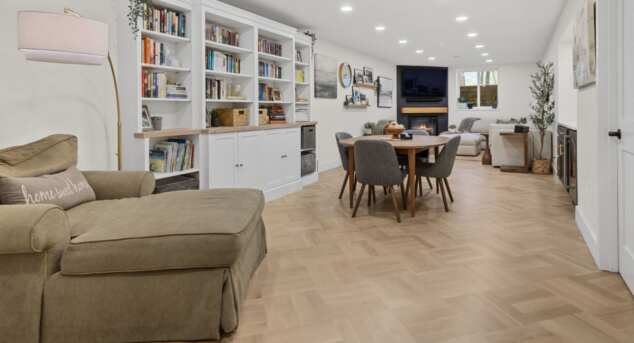
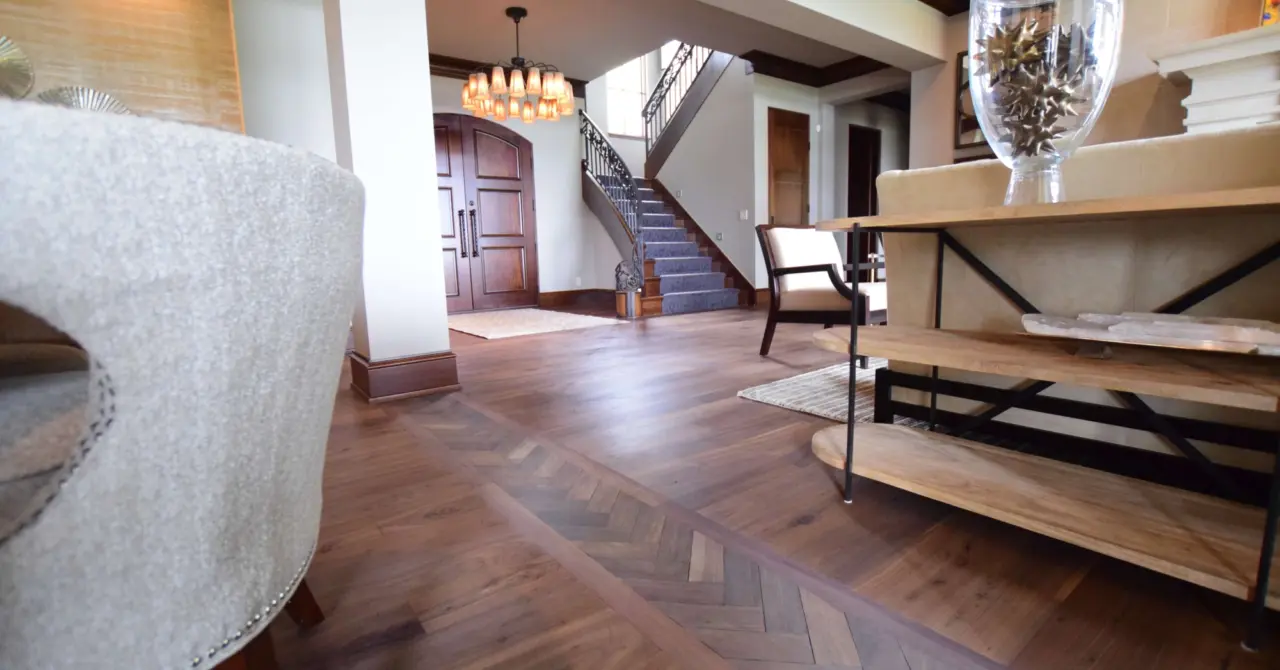
- Herringbone/Chevron: Statement patterns for entries, dining rooms, or long hallways; pair with simpler furniture.
- Borders & inlays: Define rooms in open concepts without adding walls.
Select for sheen and surface
Shine impacts both style and maintenance.
- Matte/Satin: Current, hides wear, and feels natural underfoot.
- Semi-gloss/Gloss: Formal, reflective, but shows dust and scratches sooner.
- Wire-brushed/Hand-scraped: Adds texture and grip; great with pets and kids.
Size up your stain strategy (and species matters)
Test stain on your wood—not just the sample board.
- White oak: Versatile chameleon—takes natural, gray, or rich brown beautifully.
- Red oak: Has pink/warm undertones; choose stains that neutralize or embrace them.
- Maple: Tight grain; go lighter for a smooth, even look.
- Walnut: Often finished “natural” to showcase depth; accept that it’s softer and plan protection.
Choose for the long-term: cleaning and upkeep
The “perfect” color is also the one you can live with.
- Light floors: Hide dust, show dark pet hair.
- Dark floors: Show dust and footprints but look dramatic.
- Medium tones: Most forgiving overall.
- Maintenance plan: Use felt pads, entry mats, and the right cleaner. When sheen dulls but wood is sound, a buff-and-coat (also called polishing or buffing) can refresh the finish without a full sanding.
A simple decision framework
List your home’s factors: Pets, kids, sun exposure, existing cabinets/trim.
- Choose direction: Warm vs. cool, clean vs. character.
- Pick format: Width/pattern that fits your architecture.
- Test in place: Sample stains on your actual species of hardwood, in your light.
- Plan for care: Select sheen/texture and a maintenance schedule.
In Wisconsin? We can help.
If you’re in central or northeastern Wisconsin, Signature Custom Flooring can bring curated samples to your home, create on-floor stain tests, and guide you through sheen, texture, and layout—and then install with dust-managed methods and durable, low-odor finishes.
Ready to choose hardwood colors and designs you’ll love for years? Contact Signature Custom Flooring for expert, local guidance.