Refinish or Replace Before Selling? A Cost-Benefit Analysis
Posted by Aaron Schaalma
If you’re preparing to sell your home, flooring is one of the first things buyers notice—and one of the fastest ways to raise (or lower) perceived value. The big question is: Should you refinish your existing hardwood or replace it entirely before listing? The right answer depends on what’s under your feet, what buyers will actually see, and how much time you have.
Here’s a practical cost-benefit framework to help you decide.
Start with the goal: maximize appeal, minimize regret
Pre-sale flooring work isn’t the same as “forever home” remodeling. Your aim is to:
- Make the home feel clean, cohesive, and move-in ready
- Photograph well for listings
- Avoid projects that run long or invite surprise costs
- Choose improvements buyers will value (and notice)
Option 1: Refinish (best ROI in most cases)
Refinishing means sanding to bare wood and applying a new stain/finish system. It’s typically the smartest move when you have real wood floors in decent structural shape but with visible wear.
Refinish makes sense when:
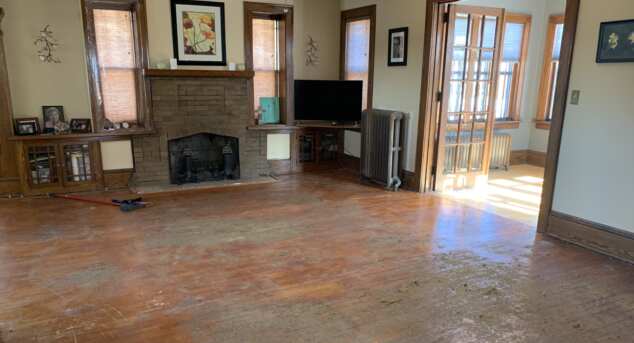
- Scratches are widespread and visible in photos
- The finish is dull, worn through, or uneven
- You want a more neutral, modern tone (within reason)
- Boards are solid, flat, and mostly stain-free
The benefits:
- Big visual transformation without changing the floor footprint
- Lower cost than replacement in most situations
- Keeps the “real hardwood” selling advantage
- Faster than a full tear-out and install (and less disruptive)
The risks:
- Deep pet stains or water damage may require board replacement anyway
- Color changes need careful sampling so you don’t pick a tone buyers dislike
- Timing matters: finishing needs adequate cure time before showings and staging
Option 1.5: Buff-and-coat (polishing/buffing) for a fast refresh
If your floors are fundamentally in good shape and the main issue is dullness or light surface scratches, consider a buff-and-coat. Many homeowners call this “polishing,” but in the hardwood world polishing is the same as buffing: The floor is lightly abraded and then recoated with a fresh topcoat—no sanding to bare wood.
Buff-and-coat makes sense when:
- The finish is intact but tired
- You need a quick turnaround before listing
- You want strong ROI with minimal disruption
It won’t fix deep scratches or stains, but it can make a home feel “fresh” fast.
Option 2: Replace (only when refinishing can’t deliver)
Replacement is the higher-cost, higher-disruption choice, and sometimes it’s absolutely the right move.
Replace makes sense when:
- The floor is engineered with a thin veneer that can’t be refinished
- There’s extensive cupping/buckling from moisture issues
- You have widespread board damage, rot, or structural problems
- Layout or height transitions must change (new kitchen layout, removing walls, matching adjacent flooring)
- The existing floor is mismatched, heavily patched, or visually chaotic in a way refinishing won’t unify
The benefits:
- Lets you change the look completely (species, width, grade, pattern)
- Solves structural issues and unevenness at the source
- Can modernize the home if current floors are beyond saving
The risks:
- Higher cost and longer timeline
- More demolition mess and potential subfloor surprises
- Greater chance of delays, which is bad news when you’re trying to list
A simple cost-benefit decision framework
Ask these four questions:
1) Can the floor be refinished?
Solid hardwood usually can. Some engineered floors can; some cannot.
2) Will refinishing solve the visible problems?
If the biggest issues are finish wear and scratches, yes. If it’s deep staining, severe movement, or widespread damaged boards, replacement may be smarter.
3) What will buyers notice most?
In most listings, buyers react to uniformity: consistent color, clean sheen, and smooth transitions.
4) What’s your timeline?
If you’re listing soon, refinishing—or even buff-and-coat—often delivers the best “bang for the disruption.”
Wisconsin sellers: Get an honest recommendation from Signature Custom Flooring
If you’re in central or northeastern Wisconsin, Signature Custom Flooring can evaluate your existing floors and give a clear recommendation that aligns with your selling timeline and ROI goals. They’ll tell you when a simple buff-and-coat (polishing/buffing) is enough, when a full refinish will maximize buyer appeal, and when replacement is the only option that makes sense.
If you want the best outcome without over-improving, reach out to Signature Custom Flooring for a pre-sale flooring assessment and a plan you can feel confident about.