Why Wood Flooring Is the Best Choice: A Timeless Comparison to LVP, Tile, and Carpet
Posted by Aaron Schaalma
You only want to floor your home once. While other trends fade and synthetic materials wear down, genuine hardwood has remained the gold standard for centuries. Unlike the disposable nature of carpet or the eventual peeling of laminate, wood offers a structural permanence that shifts the conversation from simple decoration to architectural investment.
It is easy to focus solely on the initial sticker price, but understanding life-cycle costing changes the math entirely. A carpet installation may cost less today, yet you will likely replace it three times before a wood floor even needs its first sanding. Financial planners and contractors agree that when costs are calculated over the lifespan of a mortgage, the "expensive" option often proves to be the most economical solution.
Beyond the economics, natural timber behaves differently than any other material when it encounters daily life. Plastic scratches and ceramic chips, but wood develops "patina," a deepening of color and character that creates a richer look as the material ages. This unique ability to heal and improve over time is the primary reason why wood remains the superior choice for creating a home that feels lived-in rather than just occupied.
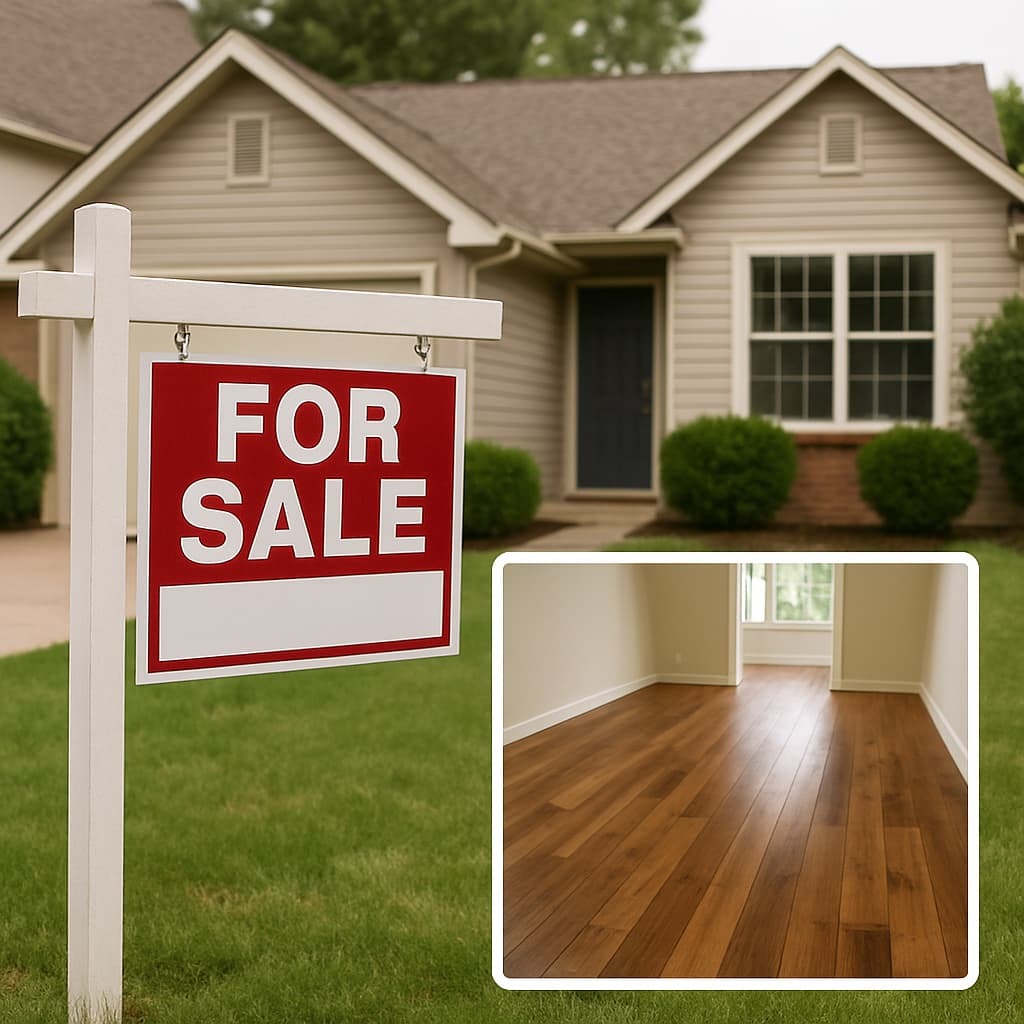
Real estate professionals consistently note that buyers value this authenticity immediately upon walking through the door. While specific tile patterns or vinyl prints can date a house to a specific decade, timeless home decor with wood floors ensures your interior never goes out of style. Ultimately, choosing hardwood is about securing a foundation that will look better twenty years from now than it does today.
Summary
Hardwood flooring outperforms carpet, tile, and LVP on durability, renewability, and total cost of ownership, delivering stronger resale value and a longer service life because it can be repaired and refinished rather than replaced.
It offers superior comfort and performance—warmer, quieter, and more forgiving underfoot—while supporting healthier indoor air and sustainability by avoiding VOC off-gassing and sequestering carbon.
Aesthetically, wood is timeless and adaptable, unifying open floor plans and allowing future style changes through sanding and refinishing. Choosing between solid and engineered options based on subfloor and climate, then following simple maintenance habits, makes wood an architectural investment that compounds over decades.
The Hidden Trap of Wall-to-Wall Carpet: Why 'Softness' Costs You More in Hygiene and Replacement
Most homeowners enjoy the initial plush feeling of a bedroom carpet, but that softness often hides a structural weakness known as fiber degradation. Unlike wood, which gains character and patina over time, synthetic fibers inevitably suffer from "crushing" in high-use areas.
This creates visible "traffic lanes," pathways where the material has flattened and lost its ability to bounce back, making the floor look worn and shadowed regardless of how strictly you adhere to a cleaning schedule.
Beyond aesthetics, there is the invisible issue of what lies beneath the surface. Think of wall-to-wall carpeting as a giant air filter that covers your floor; it actively traps particles that a vacuum simply cannot reach, whereas cleaning wood floors removes these contaminants entirely. This difference highlights the benefits for allergy sufferers, as wood significantly reduces the retention of common household irritants:
- Dust Mites: Thrive deep in fiber weaves but cannot survive on hard, sealed surfaces.
- Pet Dander: Becomes embedded in carpet padding but wipes easily off wood.
- Pollen: Tracks in from shoes and stays trapped in textile loops until professionally steam cleaned.
When you calculate the long-term cost, the "cheaper" option often becomes the most expensive investment. You might replace carpeting every 7 to 10 years as fibers fray and stains set, while a solid wood floor can last over a century with simple maintenance. Just as wood offers a practical advantage over textiles, it also solves a significant comfort issue found in harder materials.
The 'Cold Truth' About Ceramic Tile: Why Your Kitchen Needs the Resilient Warmth of Wood Underfoot
Cooking a holiday meal reveals the physical toll of your flooring choice, and this is where the extreme density of stone becomes a liability. While ceramic is durable, it offers zero shock absorption, transmitting every step directly to your joints. In contrast, organic timber possesses a cellular structure that provides subtle flexibility. This slight "give" makes the debate regarding comfort a clear win for wood, allowing you to prep and clean without the fatigue that follows a day on hard stone.
Temperature regulation further distinguishes these materials, as tile acts as a thermal conductor that rapidly draws heat away from your feet. Unless you rely on expensive radiant systems, a stone floor remains jarringly cold in winter. Wood acts as a natural insulator, retaining ambient warmth to create a cozy surface year-round. While you can install underfloor heating with both materials, timber often eliminates the need for it, maintaining a comfortable baseline temperature that ceramics simply cannot match.
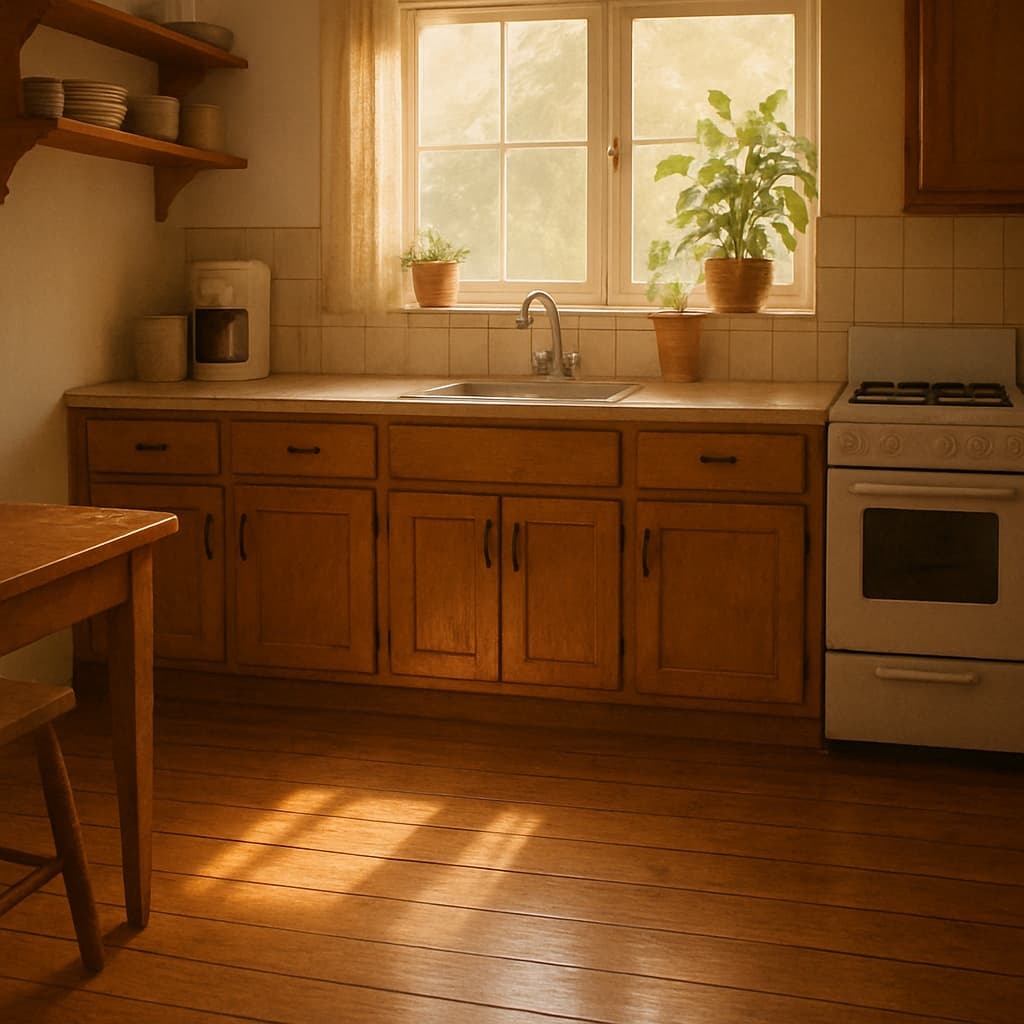
Accidents also play out differently depending on the surface; dropping a glass on tile usually results in shattered shards and a cracked floor, while wood absorbs the impact. A timber floor might suffer a small dent, but it often saves the dish and preserves the floor's structural integrity. This forgiving nature makes wood the ideal choice for kitchen flooring in active households. However, water concerns often push buyers toward vinyl, yet plastic imitations hide a significant flaw.
The LVP vs. Hardwood Showdown: Why 'Waterproof' Plastic Can't Compete with a Repairable Surface
Marketing claims that Luxury Vinyl Plank (LVP) offers a "miracle" solution often omits the structural reality of the product. At its core, this material is essentially a high-resolution photograph of grain laminated onto plastic composite.
While the printing technology has improved enough to mimic texture, your feet can often tell the difference between a synthetic reproduction and the substantial, organic warmth of genuine timber.
Scratches reveal the most critical distinction in durability. When a heavy chair drags across vinyl and penetrates the clear protective "wear layer," the damage is permanent; the image is ruined, and the only solution is to pry up and replace the damaged planks. Conversely, a scratch on a wood floor is merely a surface wound that can be buffed out or eventually sanded down, making the floor technically renewable rather than disposable.
Homeowners focused on equity should also note that the resale value of hardwood floors remains a powerful leverage point in real estate. Because vinyl is ultimately a consumable product that degrades over time, it rarely adds appraisal value comparable to a permanent natural fixture. Installing wood is less of a purchase and more of a deposit into your home's future selling price, offering a return on investment that plastics simply cannot generate.
Aesthetic longevity matters just as much as physical strength. Because wood is versatile and timeless, you can sand and refinish it decades later to match new design trends, whereas a vinyl print locks you into the fashion of the year it was manufactured.
However, choosing real wood requires navigating its own set of structural options, specifically determining whether solid planks or engineered layers provide the right foundation for your climate.
Navigating the Engineered vs. Solid Wood Dilemma: Choosing the Right Foundation for Your Climate
Traditionally, flooring consisted of a single, solid piece of timber milled directly from a tree. While this structure offers the maximum material for future restoration, it acts like a sponge, expanding in humid summers and shrinking in dry winters. This organic movement makes selecting sustainable flooring options dependent on your local climate and specific subfloor conditions.
Engineered wood solves the expansion issue by bonding a slice of real timber—the "wear layer"—to a sturdy, multi-layered plywood core. By stacking these core layers in alternating directions, the plank achieves "dimensional stability," effectively locking itself in place to resist warping. Because the surface layer is genuine hardwood, the visual and tactile experience is identical to solid wood once installed.
Match the material to your home's foundation using this guide:
- Concrete Slabs & Basements: Engineered wood is required here for its superior moisture resistance and ability to be glued down.
- Plywood Subfloors (Above Grade): Solid hardwood is the gold standard for living spaces above ground, where planks can be nailed directly to the subfloor.
While engineered planks offer stability, their long-term value relies entirely on the thickness of that top wear layer. A thin veneer acts like a temporary finish, whereas a thick layer or solid plank allows you to mechanically strip away damage, a process that acts as a reset button for your home's interior.
The Only Floor That Heals: How Professional Refinishing Saves You Thousands Over Time
Unlike synthetic alternatives that must be ripped out and replaced when damaged, real timber offers the unique ability to regenerate. This maintainability is a massive factor when considering maintenance; while a cracked tile is permanent, a scratched wood floor is simply ready for a makeover.
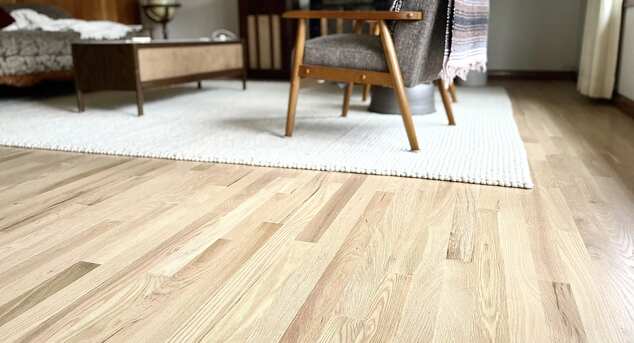
A professional "sand and finish" strips away the top fraction of an inch, erasing decades of scratches, dents, and sun fading to reveal fresh, raw timber underneath. Solid planks can typically undergo this transformation three to five times, whereas high-quality engineered planks generally support one or two full restorations, determined by the thickness of your wear layer.
Between major renovations, you can extend your floor's life with a "screen and coat." This lighter process roughly sands the existing finish without removing the actual timber, allowing a new protective topcoat to bond effectively. Knowing which service you need prevents unnecessary material removal:
- Surface Dullness: If the floor looks hazy but feels smooth, a screen and coat will restore the shine for a fraction of the cost.
- Deep Gouges: Scratches that cut through the stain to the raw wood require a full sanding to erase.
- Grey Patches: Darkened areas usually indicate water has penetrated the sealant, necessitating a full restoration.
Choosing a material that can be renewed rather than replaced is the cornerstone of eco-friendly flooring. This longevity reduces landfill waste and sets the stage for a cleaner home, as natural materials minimize the accumulation of indoor pollutants.
Breathe Easier with Natural Surfaces: The Science of Indoor Air Quality and Wood
Your home's respiratory health is often determined by what lies beneath your feet. While thick carpets act as particulate sponges that trap dust mites, pet dander, and pollen deep within their fibers, solid timber offers nowhere for these irritants to hide. This distinct physical advantage is one of the primary benefits for allergy sufferers, as a quick pass with a microfiber mop removes potential triggers rather than grinding them into the air you breathe.
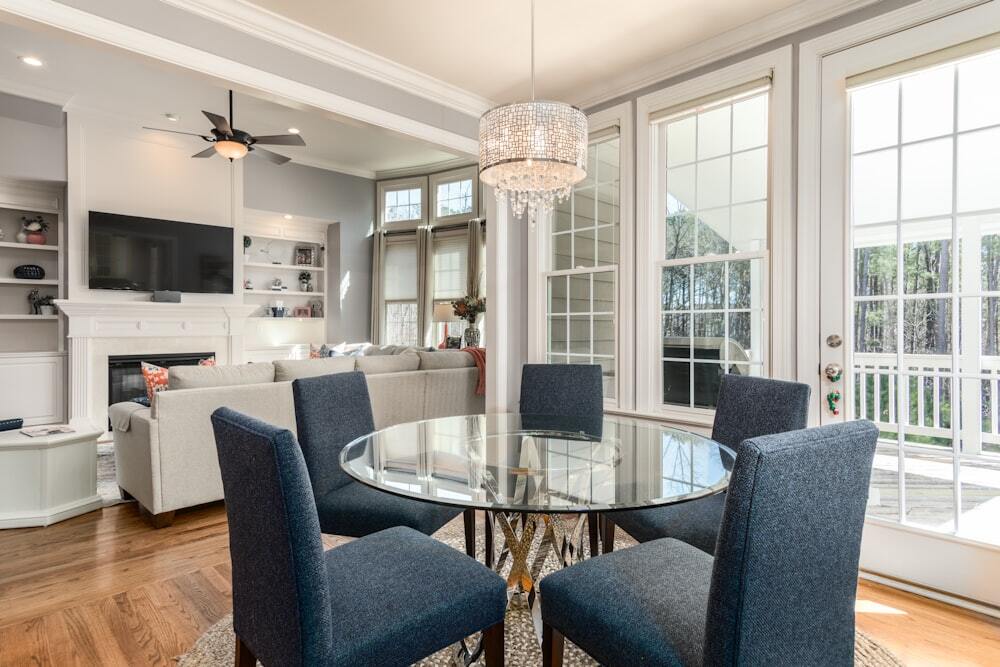
Beyond visible dust, the chemical composition of your flooring plays a silent but critical role in the bedroom and nursery. Many synthetic alternatives, particularly certain vinyls and carpets, release Volatile Organic Compounds (VOCs)—invisible gases emitted from manufactured materials—into your living space for years after installation.
Choosing real timber eliminates this plastic off-gassing, making it the gold standard for eco-friendly flooring that promotes a neutral, safe environment for your family's most sensitive spaces.
On a global scale, wood remains unique among sustainable flooring options because trees naturally capture carbon dioxide during growth and lock it away within the plank's cellular structure.
This process, known as carbon sequestration, means your floor actually reduces your carbon footprint rather than adding to it through energy-intensive plastic production. With the air cleared and the environment respected, the focus naturally shifts to how this organic material anchors your home's visual identity.
The Timeless Aesthetic: How Wood Floors Anchor Open Floor Plans and Adapt to Changing Decor
Modern homes frequently rely on open layouts to generate a sense of space, but using different materials for the kitchen and living area can visually shrink the footprint.
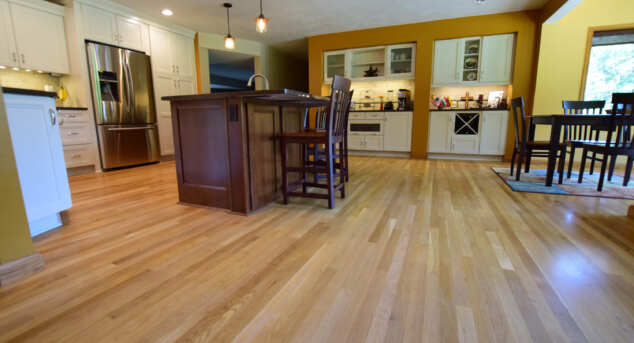
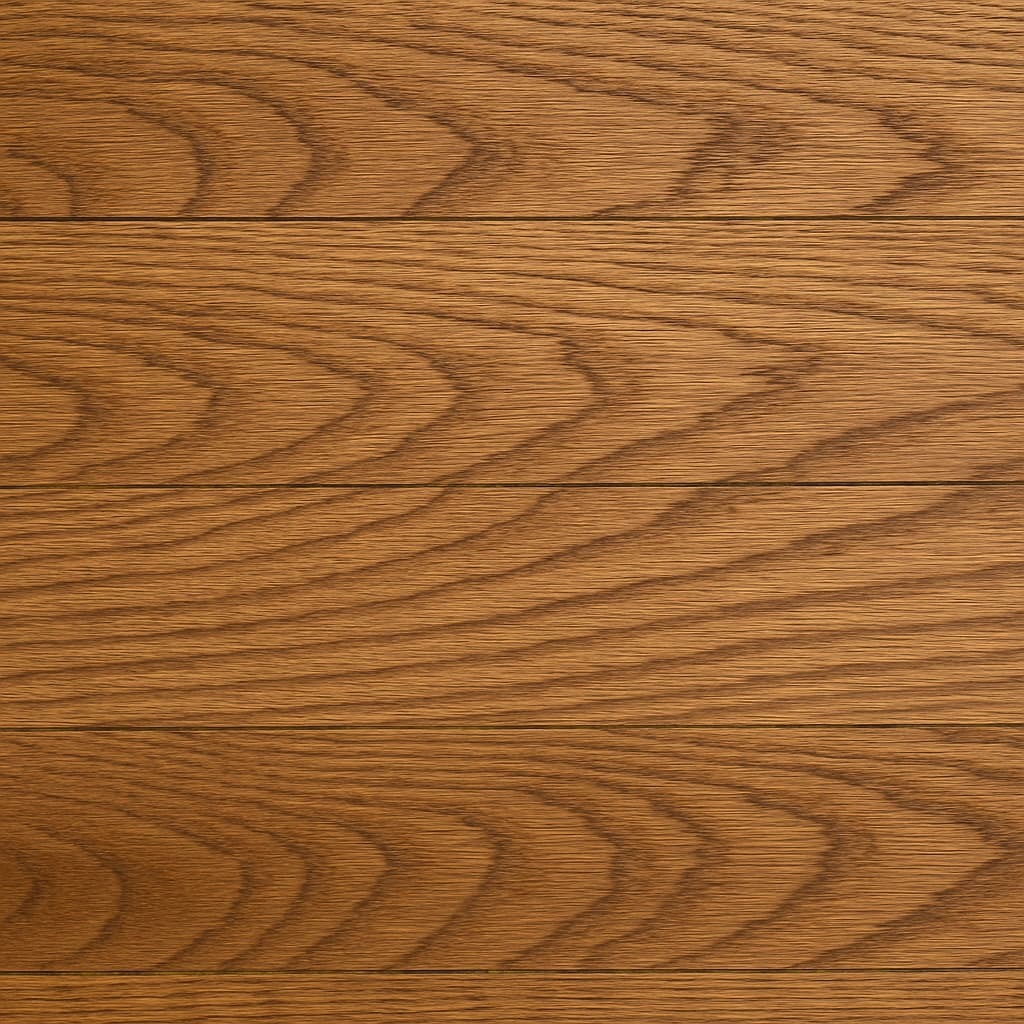
Hardwood floor versatility in open floor plans solves this by providing a continuous horizon line, allowing the eye to travel uninterrupted from the front door to the back patio. This seamless integration anchors the house, making the architecture feel intentional and cohesive rather than pieced together.
While the look of a floor captures attention, the sound it generates defines the atmosphere. Unlike the hollow "clack" typical of floating vinyl or the sharp echo of ceramic tile, solid timber offers a density that naturally softens impact noise. This acoustic dampening turns the chaotic sounds of pet claws or heavy footsteps into a muted, substantial thud, adding a layer of quiet luxury that synthetic substitutes struggle to replicate.
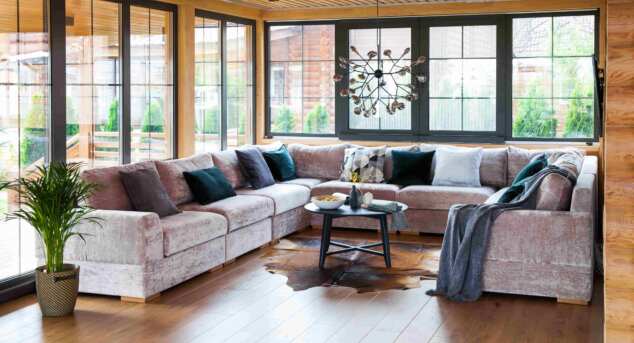
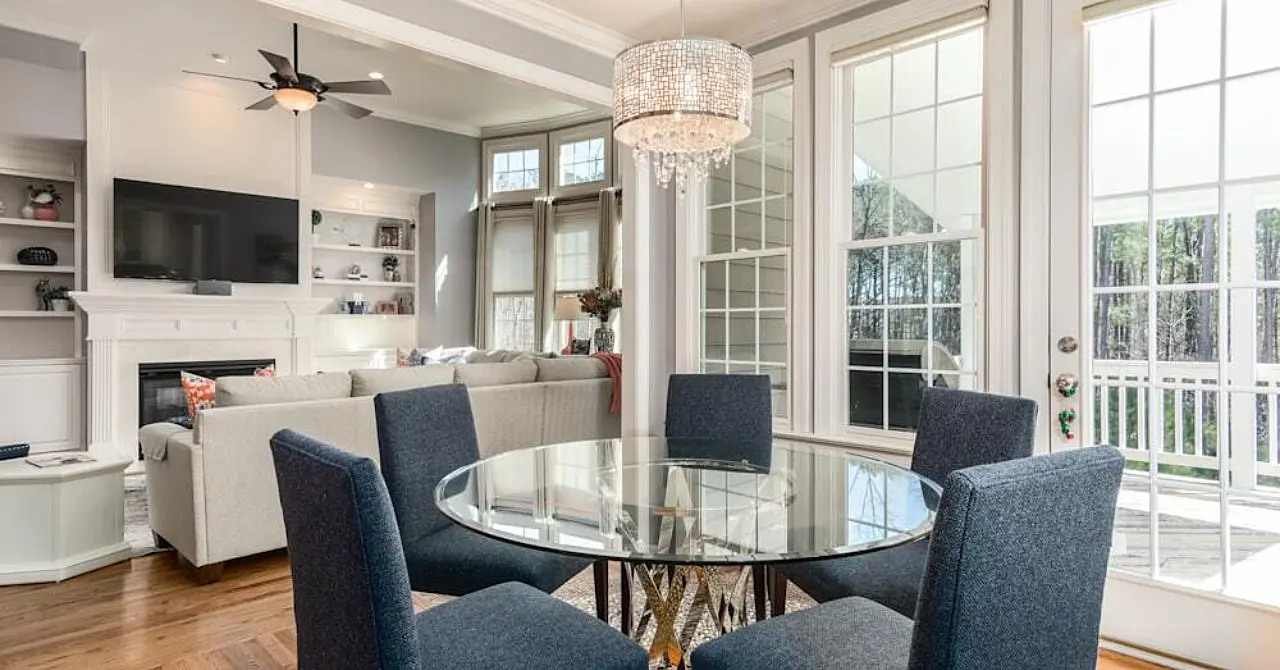
Trends in furniture and paint colors inevitably shift, yet wood is versatile and timeless, serving as a chameleon that adapts to your evolving style. Whether you swap a farmhouse table for a mid-century modern sofa, the organic grain complements both aesthetics equally well, saving you from a costly renovation when tastes change.
Achieving timeless home decor is the smartest way to future-proof your interior design, a benefit best preserved by adopting a few easy care habits.
Maintenance Mastery: Simple Habits That Double Your Floor's Lifespan
Protecting your investment doesn't require hours of scrubbing; it simply demands a strategy to manage grit. Sand and dirt act like sandpaper under shoes, slowly grinding away the finish every time you walk across the room.
By placing high-quality walk-off mats at every entrance, you prevent the majority of scratches before they happen. This proactive approach preserves the surface integrity, whereas cleaning carpeting often involves battling stains that have already soaked deep into the fibers.
How you clean is just as critical as the tools you use. While the methods for maintaining wood differ significantly from tile—you cannot flood wood with water like you might with ceramic—the process is actually faster.
Water is wood's natural enemy, causing planks to swell or cup, so avoid wet mopping or using acidic vinegar, which dulls the sheen over time. Instead, rely on a pH-neutral cleaner designed to lift dirt without stripping the protective coating.
To maintain the aesthetics of your floor, stick to a specific toolkit and avoid gadgets that promise shortcuts but deliver damage.
- Use: A microfiber mop (traps dust without scratching) and a mist-on wood cleaner.
- Avoid: Steam mops (forces moisture into joints), stiff brooms, and oil soaps (leaves sticky residue).
With these simple habits, your floor remains a pristine asset, ensuring a financial return that outpaces any other material.
Calculating the 30-Year ROI: Why Wood is the Only Sound Financial Choice
Shifting your perspective from the immediate checkout price to the lifespan of the material changes how you view your home's potential. You are no longer just covering a subfloor; you are installing an asset that grows with the property.
While carpet fades and luxury vinyl plank eventually reveals its plastic nature, real wood distinguishes itself by refusing to become disposable. It remains the only material that can recover from decades of life's wear and tear to look brand new again.
This durability directly translates to the resale value of the home. When you apply the "cost-per-year" framework, the initial investment looks far different compared to a timeline of fifty or one hundred years.
Real estate appraisers and potential buyers consistently value the permanence of organic materials over trends that require replacement every decade. By choosing wood, you are effectively pre-paying for future renovations you will never have to schedule, converting what looks like an expense today into genuine equity for tomorrow.
Deciding on the best flooring choice ultimately comes down to authenticity. Tile offers hardness without warmth, and carpeting offers softness without longevity, but wood bridges the gap between comfort and resilience. It anchors your rooms with a natural element that synthetic alternatives simply cannot replicate, proving itself as the best choice for those valuing character alongside performance.
Make your decision based on the legacy you want to leave within your walls. Visit a local showroom and touch the unfinished planks to understand the substance behind the style. When you choose a floor that can be sanded down and reinvented by the next generation, you elevate your house from a temporary living space into a lasting home.
If you’d like a free consultation about what hardwood flooding could do for your home, reach out to Signature Custom Flooring to schedule an appointment.
Q&A
Question: How can hardwood be the most economical choice if it costs more upfront?
Short answer: Look at life-cycle costing, not just the sticker price. Carpet typically needs replacing every 7-10 years. You may do that three times before a wood floor even needs its first sanding. Hardwood can be repaired and refinished instead of torn out, so its cost-per-year drops over decades. It also boosts resale value, turning today’s “expense” into long-term equity that carpet, tile, and LVP rarely match.
Question: Is engineered wood “real hardwood,” and when should I choose it over solid?
Short answer: Yes. Engineered planks have a real hardwood wear layer over a multi‑ply core for dimensional stability, so they look and feel like solid wood once installed. Choose engineered over concrete slabs and in basements (better moisture tolerance, glue-down friendly). Choose solid for above‑grade plywood subfloors where you can nail down. Prioritize a thicker wear layer on engineered if you want the ability to refinish in the future.
Question: Is hardwood practical in kitchens, or do tile and LVP handle that environment better?
Short answer: Hardwood excels in kitchens for comfort and resilience. Unlike tile, wood has natural “give” that’s easier on joints and feels warmer underfoot; it also tends to dent rather than shatter dishes or crack itself. LVP may be “waterproof,” but scratches through its wear layer are permanent, while wood damage can be repaired or refinished. With simple habits—wipe spills promptly, use mats, avoid flooding and steam—wood delivers everyday practicality plus long-term renewability.
Question: How does wood improve indoor air quality versus carpet or vinyl?
Short answer: Wood’s hard, sealed surface doesn’t harbor allergens, so dust mites, pet dander, and pollen can be removed rather than trapped deep in fibers and padding like carpet. Many synthetics (certain vinyls and carpets) can off-gas VOCs for years; real timber avoids plastic off-gassing. As a bonus, wood stores carbon captured during tree growth, supporting a lower environmental footprint than energy‑intensive plastics.
Question: What’s the difference between a “screen and coat” and a full refinish, and how often can wood be renewed?
Short answer: A screen and coat lightly abrades the existing finish to bond a new topcoat—ideal for surface dullness and minor wear. A full sand-and-finish removes the top layer of wood to erase deep gouges, grey water‑stained patches, and sun fade. Solid hardwood typically supports 3–5 full sandings; quality engineered floors usually allow 1–2, depending on wear-layer thickness. Routine care—walk-off mats, microfiber dusting, pH‑neutral cleaner, and avoiding steam mops, vinegar, and wet mopping—delays major work and can double the floor’s lifespan.