Working with Your Architect or Designer: Communicating Your Hardwood Vision
Posted by Aaron Schaalma
Hardwood floors are one of the biggest visual surfaces in your home. They’re also one of the easiest places for expectations to drift if everyone isn’t aligned early.
If you’re working with an architect or interior designer, the best results come when your “hardwood vision” is communicated clearly to both the design team and the flooring professional who will install or refinish the floor.
Here’s how to translate inspiration into a plan that looks great in real life (and avoids costly mid-project pivots).
Start with the feeling, then get specific
Designers are great at reading a vibe, but installers need specifics. Begin with a simple description: Warm and traditional? Light and airy? Modern and minimal? Rustic and lived-in?
Then narrow it down with decisions that shape the final look:
- Species: white oak, red oak, maple, hickory, walnut, etc.
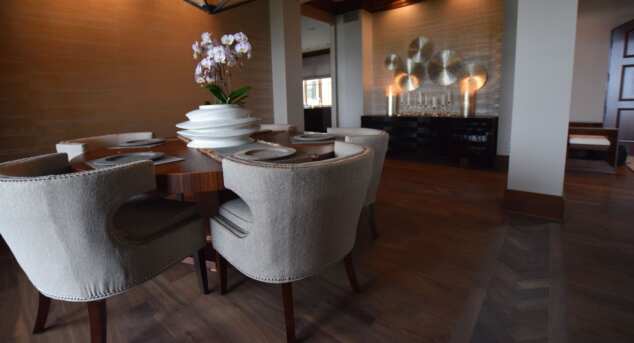
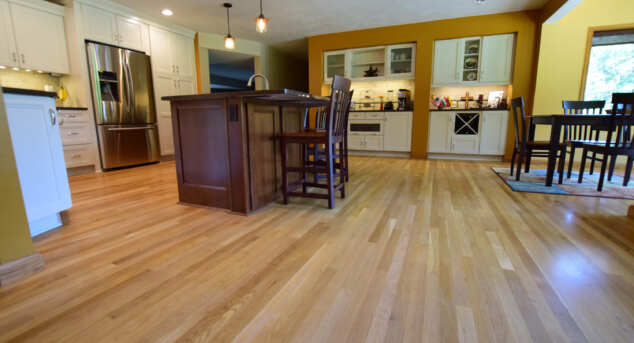
- Tone: natural, warm honey, mid-brown, or deep espresso
- Character: clean/select grade vs. knots and variation (character grade)
- Sheen: matte, satin, semi-gloss (matte/satin are most forgiving)
Bring references that show the whole room, not just the floor
Pinterest photos can be misleading because lighting and editing change everything. Share images that include:
- Cabinets and countertops
- Wall color and trim
- Window light direction
- Furniture style (and rugs)
This helps your architect/designer plan the overall palette so the floor supports the space instead of fighting it.
Ask the right questions about layout and transitions
Hardwood design is also about geometry. Discuss:
- Plank width: narrow (classic), medium, or wide (modern)
- Direction: running the long way can visually expand a space
- Stair details: nosing style, stain match, skirt boards, and rail color
- Transitions: flush vs. T-moldings, thresholds at tile, and how doorways will look
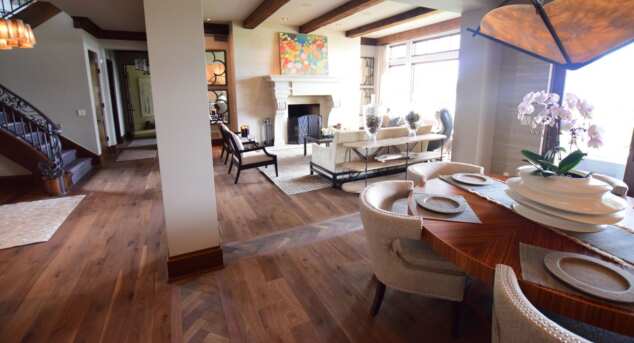
- Patterns: herringbone/chevron in an entry, straight lay elsewhere
If you’re combining hardwood with tile (mudroom, baths), the transition plan matters as much as the stain.
Clarify site-finished vs. prefinished early
These two routes create different outcomes:
- Site-finished hardwood gives you the most customization and a seamless look (no micro-bevel between boards). Great when color matching and a tailored finish are priorities.
- Prefinished hardwood installs faster and comes with a factory-applied finish. It often includes micro-bevels and a more standardized color range.
Your designer may have a preference aesthetically, but your flooring pro can advise what best fits your timeline and lifestyle.
Don’t skip on-floor samples
One of the smartest ways to avoid regret: test stain and finish on your actual wood in your actual light. Request a clear sample process:
- A few stain options applied on the floor
- Viewed morning, midday, and evening
- Final approval before the whole project proceeds
This is where your architect/designer’s “vision” meets reality.
Talk maintenance, especially if you have kids or pets
Design choices affect day-to-day livability:
- Medium tones and visible grain hide wear best
- Matte/satin sheens are forgiving
- Avoid “shiny” cleaners and waxy polishes that leave residue
- When floors dull but wood is sound, a buff-and-coat can refresh the finish (many homeowners call this “polishing;” pros also call it buffing)
A quick maintenance plan now prevents headaches later.
Wisconsin homeowners: Bring your vision to us, and let Signature Custom Flooring bring it to life
If you’re in central or northeastern Wisconsin, Signature Custom Flooring is an ideal partner for architect- and designer-led projects. We’re known for clear communication, on-floor sample testing, and craftsmanship that matches the design intent—whether you’re installing new hardwood, refinishing existing floors, or planning a long-term maintenance approach.
If you’re working with a designer and want the finished floor to look exactly the way you pictured it, reach out to Signature Custom Flooring for a consultation and a plan you can feel confident about.