How to Tell if Your Hardwood Floor is Polyurethane
Posted by Aaron Schaalma
Wondering what finish is on your wood floors? Knowing whether you have polyurethane (water- or oil-based) matters for cleaning, touch-ups, and deciding between a buff-and-coat (polish) or a full refinish when your floor needs help.
Here’s a simple, homeowner-friendly guide to identify a polyurethane finish—plus what to do next.
Quick Visual Clues
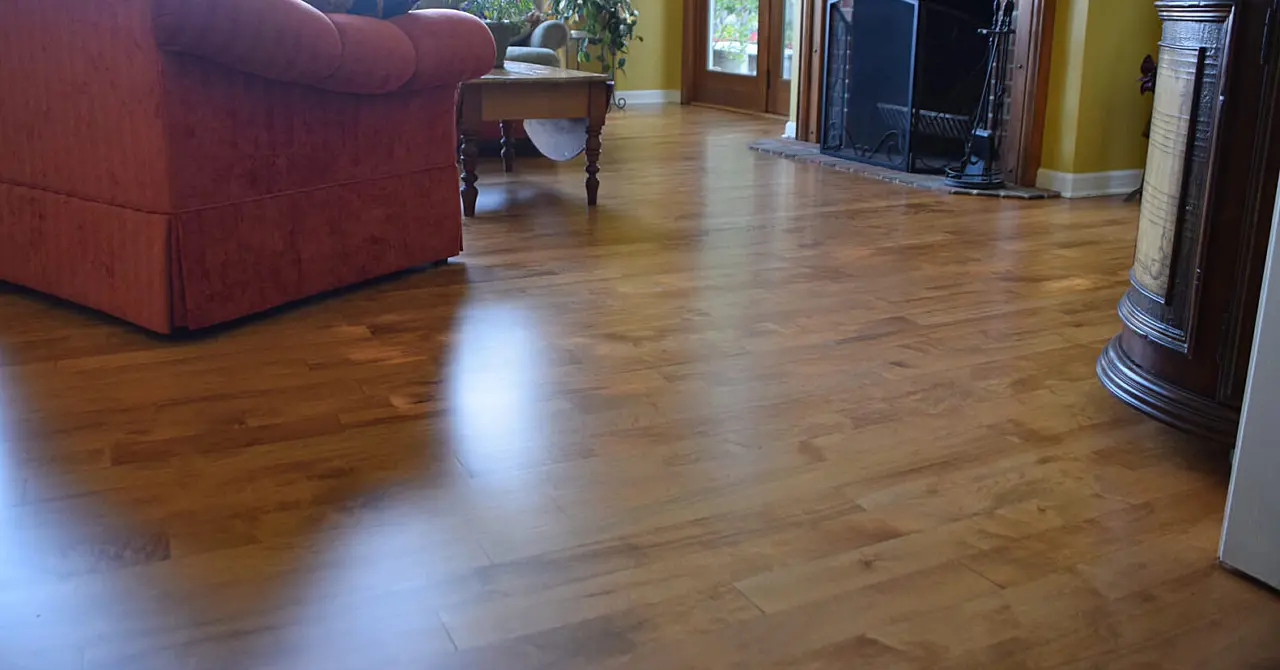
- Plastic-like film on top. Polyurethane forms a clear film that sits on the surface (unlike oils or waxes that soak in). Look across the floor in low, raking light; you’ll often see a smooth, continuous layer.
- Consistent sheen. Poly finishes come in matte through gloss, but the sheen is usually even across boards.
- Minimal “tug” underfoot. Floors sealed with poly feel slicker than waxed floors, which have a soft drag.
- Prefinished edges. If your floor has small micro-bevels on each plank (common with factory-finished flooring), it’s almost certainly a UV-cured polyurethane or poly with aluminum-oxide additives.
Simple At-Home Tests
Try these out in an inconspicuous spot. Always ventilate well, protect surrounding surfaces, and use tiny amounts on a cotton swab.
Water bead test. Place a few drops of water for 60 seconds and wipe.
If it beads up and leaves no dark spot → likely a film finish like polyurethane.
- Dark spot or rapid absorption → more likely oil, wax, or a very worn finish.
Denatured alcohol test (shellac check). Dab a cotton swab with denatured alcohol.
- If the finish turns sticky or soft immediately, it’s shellac, not poly.
- No reaction → still could be poly or lacquer.
Lacquer thinner test (lacquer check). With a fresh swab, touch a tiny amount of lacquer thinner.
- If it softens quickly, it’s likely lacquer.
- Little to no effect → points to polyurethane.
Wax check. Rub a white cloth lightly dampened with mineral spirits.
- If the cloth picks up a yellow-brown, crayon-like residue, you may have paste wax—not compatible with recoating until removed.
Oil- vs. Water-based Polyurethane
Oil-based poly tends to amber over time, giving a warm, golden tone—especially noticeable on maple and white oak. It also has a longer cure time and a mild odor when new.
Water-based poly stays clearer (less ambering), dries faster, and has lower odor. In bright light, it can look a touch cooler next to oil-based.
Why this matters for maintenance
If you confirm polyurethane and the wood itself is in good shape, you can often buff and recoat (also called polish or buffing) to refresh sheen and protection without sanding to bare wood.
If tests suggest wax, shellac, or lacquer, adhesion of a new poly coat can fail unless those finishes are properly removed first. That’s when a pro evaluation pays for itself.
When to call a professional
DIY tests are helpful, but mixed finishes, old cleaners, or restoration products can muddy results. A flooring pro can spot-test, identify the finish, and recommend the most cost-effective path: clean and screen, buff-and-coat (polish), or a full sand and refinish.
In Wisconsin? The team at Signature Custom Flooring can quickly identify your floor’s finish and guide you to the right solution—whether that’s a fast, low-dust buff-and-coat for polyurethane floors or a full refinish for deeper issues. Contact us for an honest assessment and a floor that looks incredible for years.